Trevor Abes: Writer

Forging Connections at the Toronto Comic Arts Festival

The Toronto Comic Arts Festival (2013) was not your average convention. People weren’t dressed in carefully considered costumes or walking around in character stockpiling freebies indiscriminately. Set in the Toronto Reference Library over the second weekend of May, the intimate space lent itself to discovery and spontaneous conversation more than sweaty-palmed, star struck fervor. TCAF opened its doors to the simply curious and the comic-obsessed with equal grace, focusing attention on creators and their work.0511131157-00

Caitlin Cass, an artist based in Buffalo, NY, is the founder of Great Moments in Western Civilization, a cooperative dedicated to picking and blending stories from history. Her work draws on influences from Heraclitus to Paddington Bear in a poetic attempt to fit the whole world into one craggy group picture.

0512131208-01

Caitlin Cass, holding The Text, her latest Postal Constituent offering, about “the anxiety people feel about language and its unbreakable authority over us all.”

Matt Moses, head of New Jersey’s Hic & Hoc Publications, said, “TCAF is the best in my mind. It’s much warmer, and more welcoming, and so much better organized than most conventions.”And no, he’s not just being nice. As a home for alternative artists who eschew mainstream taxonomies, H & H is akin to illustrated Bizarro Fiction.

0512131201-01

Moses, left, with authors Lauren Barnett (Me Likes You Very Much) and Pat Aulisio (Bowman 2016).

Chester Brown promoted an expanded version of The Playboy (Drawn and Quarterly), a nostalgic and curious treatment of his obsession with Playmates and self-pleasure that was first published in 1992. A believer in the idea of looking back as a way of moving forward, Brown said of his use of autobiography, “I was inspired by my friend Joe Matt’s honesty and openness about his life in his comics.” Then, he flipped one open (Matt’s Peepshow #1and, with a warm and wistful smile, pointed himself out drawn on the page. “Of course, this is when I had more hair,” Brown added.

0511131350-00

Chester Brown with The Playboy.

This year’s Toronto Comic Arts Festival showed how the unlimited social circle is the fastest way to becoming yourself. From the small presses happy to have tables, to the centrally located major players digging through boxes of money to make change, everyone’s fictions were courageously laid bare for the sake of forging new connections where none existed before.

Record Store Roundup: Kops Records

0115131159-00

Founded in 1976 with a focus on soul music and mod subcultureKops Records (229 Queen St. West) is Toronto’s oldest independent record store. It’s known for housing the largest selection of seven inch 45s in Canada and for an abiding dedication to musical roots. According to General Manager Patrick Grant, “[Kops] specializes in unveiling to people the roots of stuff that they like. We’re trying to provide [records] that elaborate on tastes you already have.” In this way, you can walk in listening to The Fugees’ “Killing Me Softly” (1995) and walk out – with two LPs under your arm – having learned that its memorable sitar riff is sampled from A Tribe Called Quest’s “Bonita Applebum” (1990) which sampled it first from Rotary Connection’s “Memory Band” (1967).

Read the rest here: Record Store Roundup: Kops Records.

The Band Has Gears: Atom and the Volumes – EP


Atom and the VolumesToronto’s Atom and the Volumes’ self-titled EP comes across as built around the idea that the best music feels just like closing your eyes and dancing. The band could be the spawn of Wilco and Failure, a cocktail of raw emotion, storytelling and unexpected flourishes.

“Pointed Pins” is a brooding garage anthem topped with 80’s glam metal flare. The fuzzy, whirling guitars lend the pop-sensible chorus an edge like bacon on maple. “Lick Your Tears,” about a corroding relationship, has the slowest tempo on the album and is at least twice as angsty; the short wah-wah riff that reappears throughout the song evolves into a  comment on the dangers of repression. The playing thickens at about the two and a half minute mark, becoming stronger than the sum of its parts, and you’re liable to be blanketed in sound.

“Boardwalk,” sultry and distant, floats along on an almost country-western twang from both strings and singer. Any Toronto flâneurs looking for a soundtrack best have a listen.

“To The Beat” typifies something to look forward to on future Atom and The Volumes releases: the band has gears. Mellow groove can morph into full-on jam session at the hiss of a cymbal. 

The outro’s called “Ultimate Power Question” and its suggestion about what fuels human progress and creativity will have you paying close attention to your hips.

Get the full scoop here: Atom + the Volumes.


21 Of The Best Southern Hip Hop Album Covers

Besides heavy bass and clap tracks, the Dirty South is synonymous with epic album art and a liberal use of grammar and spelling. Props to Lil’ Flip; it takes a man to go literal with leprechaun.

1. Snoop Dogg – Da Game Is To Be Sold, Not To Be Told.

Snoop Dog

2. David Banner – MTA 2: Baptized In Dirty Water.

David Banner

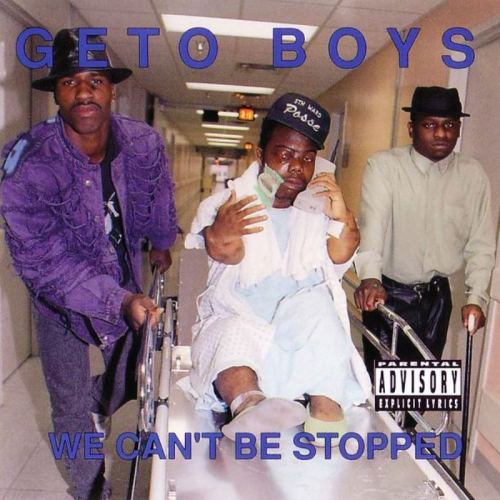
3. Geto Boys – We Can’t Be Stopped.

Geto Boys

4. TRU – Tru 2 Da Game.

TRU

5. Skull Duggery – These Wicked Streets.

Skull Duggery

6. Lil’ Flip – The Leprechaun.

Lil Flip

See the rest here: 21 Of The Best Southern Hip Hop Album Covers.

How to Write a Poem in 7 Easy Steps

Magic Poetry Typewriter1. Research how to locate and outline the chin of a toy terrier. Find a toy terrier, outline its chin, then count the hairs on said chin to determine the number of lines your poem will have.

2. Purchase a hatchet and 7 copies of your most loathed newspaper. Stack the newspapers and roll them together, fastening the resulting cake roll with elastic bands. Plate and freeze. In the morning, slice off a dessert-sized portion for melting next to your bowl of cereal and cup of black coffee. If, after breakfast, you cannot deduce at least one thing you hate about the newspaper from the soggy mush, its contents will determine your poem’s subject matter. Otherwise, dump it in the trash and try the next slice tomorrow.

3. Suppose you spot the word “politics” upside down drooping over the plate onto the table and the name “Tibetan Mastiff” crossed with the word “court” in the middle of the plate where ink should be pooling. You decide to take as your theme the history of court cases in which both defendant and prosecution are of the Tibetan Mastiff breed.

4. Research famous Tibetan Mastiff trials and choose one. Suppose you choose Price v. Shanti 1983, where one Shanti Warren was accused of stealing one Price Kennedy’s gold-encrusted leg of lamb and taking it abroad from Toronto to Botswana, where security discovered counterfeit AAA-grade kibble inside of it and duly detained her.

5. For rhythm, think of the last song you had to turn off to stop yourself from getting sick of it. Play it on repeat and improvise about the case; be how you wish you were most of the time; do this until your ears are worn to the metal. Then, continue in and relish the silence. Record using tape or laptop microphone.

6. From the resulting material, select sentences you enjoy as they stand on their own.

7. Try to put them together.


Ashley St. Pierre – Star Spinning: A Review

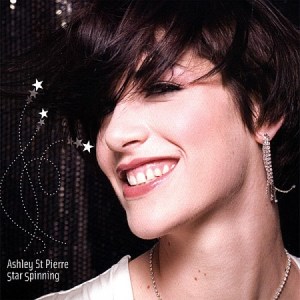
Ashley St. Pierre

The wandering, searching trumpets that start off “A Momentary Lapse” lead us to St. Pierre’s poised and elegant soprano.  She sings and we notice two things:

1) The song’s lyrics are too iambic to be a fluke, meaning we’re dealing with an artist versed in rhythm.

2) She stops singing at 1 minute 20 seconds to make way for a round of solos, and starts singing again only at 6 minutes 50 seconds. Louis Armstrong would never show off less on purpose, so why would St. Pierre disappear on the album’s first song? She disappears because “A Momentary Lapse” doesn’t need more lyrics, meaning we’re dealing with an artist for whom the music is top priority. The song is a knockout opener for a contemporary jazz album for its neat arrangement and complete lack of weirdness. It could serve as a sonorous definition of jazz in your favorite encyclopedia.

On The Beach Boys’ “God Only Knows,” St. Pierre’s nuances are like patterns on a Rothko, assured, unpredictable, and free of self-consciousness, an airy dream that ends too soon as dreams tend to. And that goes doubly so for her seamless scatting (i.e. vocal soloing) display at the end.  St. Pierre utilizes her voice as an instrument and is able to incorporate it into the playing; rather than singing over background music, everyone’s in more or less the same relief.

(It’s at this point, four songs in, that I wonder why the title, Star Spinning? Stars are of course already spinning.

The title could be a cheeky way of expressing the rotation of the Earth.

A star may be spinning now, but it won’t be later when it turns into a black hole: Is the title then a commentary on youth’s fickle romanticism and the irrevocability of death? Decide for yourselves.)

The guitar solo on “Afro Blue” begins with a dare and descends into a joyous, frenetic jig that distills time and emphasizes texture. It’s the album’s freest, most purely improvisational moment. The finest is the trumpet solo on “Jorea;” it’s so regal it’s probably purple for synesthetes; the mariachi universe within which the player operates is as bad ass as your favorite television ranger and offers a short window into what Sketches of Spain might sound like if it was recorded in the 21st century.

There’s something refined about the kind of jazz this band creates. From the tender and cinematic “You’re Not Here,” to the yearning, unreserved “What Are You Doing The Rest Of Your Life?” the players, including St. Pierre, sound live. They sound like they’re putting on a performance and we’re being presented with a show, something rehearsed, not engineered; a good thing if you enjoy vulnerability on your iPod.

Have a listen here: Ashley St. Pierre.

Buy it here: Star Spinning.

Staff Selections: Ellis Iyomahan

From The Toronto Review of Books 

Ellis IyomahanIntroducing Staff Selections, a new series of interviews from The Toronto Review of Books with the people that run Toronto’s record stores, book stores and art galleries.

The first interview is with Ellis Iyomahan, Play de record IT expert and owner of Studizzy Productions. Born in Oslo, Norway, to Nigerian parents, he’s been living in Toronto for the past four years, and has produced tracks for the likes of Susie KylieJhyve, and the late Camille Douglas.

Read it here: Staff Selections: Ellis Iyomahan.

The Boy Who Exhaled on a Windshield and Melted the Home of the Next Messiah

SleddingWinter in Toronto can be non-existent as a soggy laptop, but sometimes it’ll snow dependably and in plenty for many days, long enough to go outside and enjoy it. Michelangelo Anderson Lavoisier stood in his red ski pants and coat and toque at the top of a hill constructed out of snow against a brick wall of a butcher’s shop that sold horse meat. The hill, compacted by upside down garbage can, wore dozens of holes from the garbage can handles that were filled as soon as the first child caught one and tipped over. He was a fat child, Michelangelo, with a pointed, freckled face, red hair, and a slight hint of bow-leggedness. He considered sweets his greatest joy and his favorite snack late at night called for melting sugar in a pot with cream and dried coffee, and maybe a star anise; his grandmother, Estefanía Ramirez Lavoisier, taught him how to use the electric stove when she came to babysit. Michelangelo had climbed onto the hill by the side on a wooden ladder with a rectangular cut of cardboard in his teeth. Down below, a crowd of children paid no attention and formed two halves of a rainbow of winter gear. Upon reaching the bottom of the hill, only the fastest sleds made it past the gap in the audience to the edge of the street.

Scanning the road for cars, not wishing to depend on the onlookers for due notice, Michelangelo waved at a woman in an apartment window before letting gravity engulf him, his hands up front holding the edge of the cardboard to steer. He spun round twice during the first third of the descent, much to his delight, and traveled the rest of the way facing back at the hill, watching the powder he rustled in his wake. He stopped when the soles of his feet thumped and hyperextended against a Hyundai Santa Fe on the other side of the street. A few boys yelled “car!” to be mean though the road was empty. As soon as he’d realized he’d made it, Michelangelo tried to stand and shout with pride but fell from the dagger-like pain burrowing into his ankles; the two nearest children felt a sense of responsibility and carried him like a baby. They struggled with his weight, swaying away from the car then back, determined to hold on and save face amidst their peers. But they grew tired because the snow hadn’t been shoveled in a few days and took the last resort: understanding the SUV as a stretcher and chucking Michelangelo on the windshield to rest and recover.

The patient breathed heavily and squirmed on the car, managing to wave at his emergency medical responders to express his gratitude. It didn’t help his rehab that the windshield was covered in snow and harboured patches of ice that had been given a chance to harden. The thing that helped Michelangelo ignore the toothpick machineguns spraying his feet was the particularly dragon-like effect his breath had on the fine flakes. He ha’d hot air to clear a spot for his cheek and laid it on the frosted glass so that his mouth faced a good foot of accumulated snow ready for melting. He learned to breathe almost right up against the frozen fluff to maximize impact; the water drops seeping into the snow like a flesh-eating virus, like somebody’s bite mark or mold of the upper jaw. Soon enough, Michelangelo had ha’d a semicircle that from above seemed like it seeped out of his skull; together, the two instances of roundness re-enacted the profile of a disproportionate tomato. At the semicircle’s farthest point from its creator, floating in a now refreezing group of droplets, the second coming of Jesus Christ frowned amongst his belongings the day before he was scheduled to make his official return.

He looked just like he did in pictures except cricket-sized and with lower standards, long brown and red locks curled over his bare shoulders, goatee fully connected to an evenly groomed moustache.

He lived in (a once sprawling three bedroom, two bathroom, four foot by one foot icicle of) a mansion on a windshield in Toronto for two reasons. 1) He wouldn’t be paid for another two Thursdays after reporting for the messiah gig, and the rent was cheap. 2) He predicted it would all happen as it did three weeks ago as his first proper go at a miracle on the first episode of the first season of the reality TV ratings smash Jesus does Toronto.

The vested cameramen hovered conspicuously over the Hyundai’s driver’s mirror.

An inflatable Bible pool chair kept Jesus dry. Gathered on it was his wallet, made of hemp, an extra white monogrammed robe identical to the one he wore, a pair of frozen sandals, a bottle of wine marked “water,” a square boxy Tupperware container packed tight with butter tarts, and a thermos of black coffee. His attempts at salvaging heavier items like bed frames and mattresses would have to wait until he acquired an ice pick to dig them out.

While eager passengers screamed, racing down the hill to a safe stop, occasionally veering sideways and bowling into a section of the queue, Jesus cupped his chin in five fingers and caught Michelangelo’s attention. Michelangelo did not hesitate to take Jesus in his left hand for safe examination, soon determining that what he held had to be gummy candy.

“Ahhhhh,” said Michelangelo, torpedoing his gummy person in.

Jesus wouldn’t be almighty until after the induction ceremony the following afternoon; there was no use fighting back.

Nor did he have to. Michelangelo’s family’s limited means had taught him a long time ago that candy that is sucked on is candy that lasts. After one hairy lick, he dropped Jesus, spit, and was carried off by a woman that everyone supposed was his mother.

Jesus changed robes and had a tart.

10 Reasons to Love Someone Quantum Mechanically: A Tetrad of Expansive Misreadings

Particles

10. According to Heisenberg’s Uncertainty Principle, the inability to simultaneously predict your and your lover’s locations and velocities means that, whether still or moving, spicing up the relationship is already implicit in the universe.

9. Spreading out like a wave comes in handy during lapses in judgement, because it allows you to consider or “try out” all the options at hand before compacting into a particle when it’s time to take responsibility for your actions.

8. Because you can only predict probabilities at the quantum mechanical realm of atomic and subatomic particles, you can never really win, no matter the argument.

7. There are minor temperature variations across the sky and as far back in spacetime as when it was cold enough for atoms to fire up their nuclei. These variations are leftovers from the formation of planets and galaxies billions of years ago. Analogously, that thing you did in the late 80’s that your partner still brings up to prove a point, even though it has nothing to do with said point, is not going away any time soon.

6. A quantum is the minimal amount of any physical entity that can be involved in any interaction. It’s a packet of energy, a cautionary tale, the birthday/anniversary home appliance of physics.

5. Hamilton’s action principle says that physical systems evolve to minimize the action. You don’t run home when you can walk. You tee off from a par 5 with a driver instead of a 9 iron. When your lover asks if s/he looks fat, you say nay.

4. One of the many claims of quantum mechanics is that we do not live in a deterministic universe, that causality, on the smallest known scales (electrons colliding), is not fixed but uncertain, whereas macroscopic examples of causality (billiard balls colliding) only seem deterministic because of how they appear to human eyes. This is why grand gestures like trips and diamonds and designer digs sometimes do not go as far as cooking dinner or sweeping house.

3. According to quantum entanglement, two particles that interact physically, adopt the same state, then become separated will exhibit correlated values for the same measurement (position, momentum, energy, etc), no matter how far apart they happen to be. If a particle is found to be spinning in the clockwise direction, its entangled partner, whether a foot or a million miles away, will be found to be spinning in the counter clockwise direction: thus the natural foundation of petty disagreements about the cleaning of dishes, the clearing of gutters, the bagging and subsequent disposal of trash, and the differences between men and women.

2. The grand intention behind quantum mechanics is to better describe the universe. Descriptions can be accepted or rejected at any point; they are never eternally true. They are only true until experimentation disproves them. It’s fair to say that science is down with you unsettling your preconceptions about life, love, death, down to the right kind of cheese for saltines, in the hopes that you’ll one day comprehend that stepping stones are made from very many mistakes.

1. The speed of light is absolute; it is not measured in relation to anything else like a moving car to the road, or a plane to the clouds. The speed of light just is how fast light goes. What about you does not depend on anything other than yourself?

Record Store Roundup: Grasshopper Records

From The Toronto Review of Books

Enveloped in a neck-protecting aura of Wu-tang posters, busted amps, Star Wars figurines, and portraits, the vinyl-only Grasshopper Records (1167 Dundas St. West) feels like your coolest friend’s apartment if everything in it went up for sale. Decked out with two black pleather couches and a club chair with armrests wide enough to hold your coffee, the invitation is to hang out and browse rather than come in knowing exactly what you’re looking for.

Read the full review here: Grasshopper Records.

Big Boi’s Vicious Lies and Dangerous Rumors: A Review

Big Boi Vicious Lies and Dangerous RumoursA benefit of being an O.G. is that you can expand your musical horizons without fear of losing credibility. Fans are going to be willing to give your change in direction a chance and listen with an open mind, while artists in your preferred genre won’t be so quick to deride your non-traditional leap.

Antwan André Patton, A.K.A. Big Boi, A.K.A. Daddy Fat Sax, is not pained by the anxiety of influence. On his second solo album, Vicious Lies and Dangerous Rumors  he enlists a pair of acts more used to weaving computerized dreamscapes than serving as the backdrop for someone’s rhymes.

The first, indie psych pop duo Phantogram, prevents “Objectum Sexuality” from devolving into a futile ladies’ jam by crafting a self-reflexive hook (It’s all you want these days cause you feel nothing inside / You know there’s nothing wrong, but you’ve been wondering why) that works in opposition to Patton’s explicit confessions. The duo also produced the track, opting for a multilayered, synthesized approach that stays as true to the funk of Southernplayalisticadillacmuzik as it does to personalizing Southern Hip Hop, a subgenre known for its posing and the at times numbing similarity of its beats and lyrics.

Little-DragonThe second, Swedish electro quartet Little Dragon, feature on “Descending” and “Thom Pettie,” a dirty ditty produced by long-time Outkast collaborator and Grammy-winning producer Chris Carmouche (Album of the Year, Speakerboxxx/The Love Below, 2004). Dragon vocalist Yukimi Nagano’s short and sweet contribution lends a gospel edge to this otherwise formulaic flossing platform.

Compared to “Pettie,” the regurgitated “In The A” feels conservative and out of place because Vicious isn’t about going hard (definition number 3), it’s about looking inward. Despite T.I. and Luda’s strong cameos, the track falls flat for not eschewing the braggadocio and bombastic production that is their comfort zone, even though Patton and his cohorts have earned the right to let their guards down whenever they please. Luckily, deviations from Vicious’ meditative, unrushed aesthetic (including “Mama Told Me”) are both minimal and forgettable; and forgivable as well, as we’ll see later on.
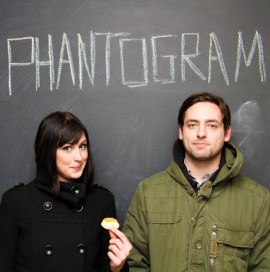
Phantogram“CPU,” featuring Phantogram, is a love song whose chimes and buzzy synths dial in on a vulnerable sense of longing born from always being on the road. It starts out like a hipster 80’s reimagining, one that’ll reach out and tap your feet til they learn what’s good for them; then, it morphs into an expression of weakness (against black stereotypes), the purest I’ve ever heard from Patton, whether alongside his virtual brother, André Benjamin, or not. A question “CPU” leaves us with is whether, after however long, we are able to differentiate between a loved one and his or her internet trail.

Phantogram equals Patton’s lyrical depth through straight hook mastery. On “Lines,” Sarah Barthel wails “I’ve wondered how / I’m happier when I lose what I’ve needed all my life,” successfully daring to make an important point about the value of indecision, of letting go of what was once thought as the nearest path to becoming somebody in hip-hop: It may seem like a small achievement, but Barthel is talking about losing interest in material things, and so is Patton. When the princess cut diamonds, fur coats and Escalades no longer matter, he says, one’s mind spends all its energy on identifying “the dangers in the circle of angels,” a circle the battle-worn rapper now frequents with caution, having once thought, like many newcomers to the game, that it contained friends loyal beyond questioning.

I’m not exactly displeased about the “contractual obligations” that prevented André Benjamin, A.K.A. André 3000, from appearing on this album. Let’s face it, if Benjamin is the strange half of Outkast that drops the commendable “Prototype” as a single, Patton is the time-honored half happy to excel within hip-hop’s established parameters: After Benjamin’s “Hey Ya!,” his “The Way You Move” was the second song to hit number one on the Billboard Hot 100 in ‘04 (and both songs can take some credit for all the number one’s on that chart until the end of the year coming from African-American artists); its accessibility and elaborateness surpass your average spitta’s crossover club anthem, but it’s still a club anthem, doomed to not have survived in the public consciousness a mere eight years since dropping.

However, Vicious Lies and Dangerous Rumors feels immune to such a fate. The principle that informs it, broader than genre or an experienced ear, is a willingness to collaborate with an indie music scene Outkast never really had to find a place in after signing with LaFace as teenagers in ’92. And such a collaboration required of Patton that he make room for sharing his personal imperfections, which only became more arresting themes once conveyed through uneven, remarkably concrete, form-mimics-content song structures: this is why any review that faults Vicious for lack of cohesion fails to understand that the album sounds like the cautious self-actualization that pervades it.

In a way, Big Boi is a new artist, risking emotional openness for the first time, hoping for a response that’ll have little to do with platinum certifications or his decorated professional past.

Listen to: “Descending,” “Tremendous Damage” and  “C.P.U.

Hopscotching Cross Wonder

Saint Augustine taught me about wonder. He said “you acquire it as a child, and you should never lose it, because it’ll come in handy once you get a day-job.”

To feel wonder is to be astonished, floored (but not ceiling-ed), to say “oh my” with jaw dropped and eyes wide open. It is to embrace an unfamiliar idea like a random book-vending machine.

Bliblio-matThen after your embrace it, figure out the place it occupies in the world by asking yourself questions like: Where can I find such a machine? (Click on it for your answer). Am I prepared to learn about marine biology if that’s what Lady Fortune thinks my two cents are worth? What if it’s taxidermy, or anesthesiology, or fishing?

But don’t get overwhelmed. Too much whelm can send you to bed.

Next, wonder is never done. Or rather, it never ends. It all depends on curiosity and silliness’ willingness to strong-arm disbelief til the paper is no longer ripped but rugged.

Free English

Whomever is responsible for locking English away, I hope they reconsider. Language is claustrophobic, it needs to go outside, lest its feathers fade and its speakers forget what to do during vocabulary tests.

Unless

Someone is giving English away for Christmas. I hope for the fresh stuff, even though it spoils quicker than canned, and a canned adjective is always a two-for-one.

And finally, a few words from Mr. Vonnegut about a group of people that don’t want your money, your brain to wash, or your lawn to stick signs in.

1213122040-01All they want is for you to risk getting confused for a while, and lost when you have the time, to see what happens after the search party finds you.